Akan Funeral Traditions: A Complete Guide to Customs, Symbols & Rites
The Akan people of Ghana — comprising the Ashanti, Fante, Akuapem, Akyem, Bono, and other subgroups — have some of the most elaborate and deeply symbolic funeral traditions in all of West Africa. For the Akan, death is not the end of life but a transition to the ancestral world. A funeral is therefore not merely a time of grief but a grand celebration of life, a sacred duty to the departed, and a social event that reaffirms family bonds and community identity. Understanding these customs helps families honour their loved ones with dignity and cultural authenticity.
Pre-Burial Traditions
When a death occurs in an Akan family, the news is first shared with the family head (Abusuapanyin) before being announced publicly. It is considered deeply disrespectful to spread word of a death before the elders have been informed. The family head then convenes a meeting of senior family members to begin planning. During this pre-burial period, the body is kept at the morgue while preparations are made. The family selects a burial date — typically a Saturday — and begins mobilising resources. Close relatives may observe a period of quiet mourning, refraining from public celebrations and wearing subdued clothing. Among the Ashanti, the family may consult a traditional priest to ensure the death was natural and to seek spiritual guidance for the burial. The Fante may hold a special wake-keeping ceremony on the Friday night before the burial, featuring hymns, prayers, and tributes. The Akuapem and Akyem similarly hold family gatherings to discuss funeral logistics, contributions, and roles. In all Akan subgroups, the concept of communal responsibility is paramount — every family member is expected to contribute financially and physically to the funeral preparations.
Burial Day Customs
The burial day is the climax of the funeral. It typically begins early in the morning with the body being prepared and dressed in fine clothing or traditional Kente cloth. Among the Ashanti, the deceased may be adorned with gold jewellery and placed in an elaborate coffin — sometimes a fantasy coffin shaped to represent their profession or passions. The body is laid in state for viewing, and mourners file past to pay their final respects. A Christian or Muslim service may follow, depending on the faith of the deceased, but traditional customs are often observed alongside religious rites. The chief mourner — usually the eldest surviving sibling or the family head — leads the mourning procession. Drumming, singing, and sometimes traditional dancing accompany the procession to the burial ground. Among the Fante, brass band music is common, with lively highlife tunes played to celebrate the life of the departed. After the interment, mourners return to the family house for food, drinks, and continued expressions of condolence. Donations are collected and publicly announced — this is a key part of Akan funerals, as contributions help offset the significant costs of the ceremony.
Post-Burial Rites
Akan funeral traditions do not end at burial. Several important rites follow in the days, weeks, and months after. The "nkradea" or final funeral rites are held on the Sunday or Monday after the burial. The family gathers to settle accounts, resolve any disputes, and formally thank those who helped. Among the Ashanti, the "ayie ase" (literally "under the funeral") is a period of 40 days during which the family continues mourning. The 40th day is often marked with a thanksgiving service and a family gathering. The Fante hold a similar post-funeral observance. One year after the death, the family may hold a memorial service or anniversary celebration, which is an opportunity to honour the memory of the departed and bring the family together once more. Throughout these periods, the family head plays a central role in organising events, managing funds, and ensuring that traditions are upheld.
The Role of the Chief Mourner and Family Head
In Akan funeral culture, two roles are especially important: the chief mourner and the family head (Abusuapanyin). The chief mourner is typically the closest surviving relative — a spouse, eldest child, or sibling — and serves as the public face of the grieving family. They lead mourning rituals, receive condolences, and are often dressed distinctively in deep red or black cloth. The family head, on the other hand, is the organisational leader. They convene family meetings, oversee the funeral budget, delegate responsibilities, coordinate with the community, and ensure that all customary rites are performed correctly. In matrilineal Akan families, the family head comes from the maternal line and wields significant authority over funeral decisions, including the burial location and the distribution of the deceased person's property.
Adinkra Symbols Used in Funerals and Their Meanings
Adinkra symbols are an integral part of Akan funerals. Originally, Adinkra cloth was worn exclusively at funerals and other solemn occasions. Each symbol carries a profound philosophical meaning. Here are some of the most commonly used Adinkra symbols at funerals and their significance:
- Owuo Atwedee (The Ladder of Death) — "Everyone shall climb the ladder of death." This symbol represents the inevitability of death and the belief that mortality is the shared destiny of all human beings.
- Nyame Nwu Na Mawu (God Never Dies, Therefore I Cannot Die) — Symbolises the eternal nature of the soul and the Akan belief in life after death through God's immortality.
- Akoma (The Heart) — Represents patience, tolerance, and endurance. It is used to express the need for patience during times of grief and mourning.
- Sankofa (Go Back and Fetch It) — "It is not taboo to go back for what you forgot." This symbol encourages mourners to reflect on the past, honour the legacy of the departed, and learn from their life.
- Nyame Ye Ohene (God Is King) — Symbolises the supremacy and omnipotence of God. It reminds mourners that God is in control of life and death.
- Owo Foro Adobe (Snake Climbing the Palm Tree) — Represents perseverance, steadfastness, and the ability to overcome adversity — a reminder that the family will endure despite the loss.
- Hwemudua (The Measuring Rod) — Symbolises excellence, quality, and the highest standards. It is used to honour a life well-lived and to celebrate the achievements of the departed.
- Obi Nka Obie (No One Should Bite the Other) — Represents peace, harmony, and the importance of unity. It reminds the family to come together and avoid conflict during the funeral period.
- Adinkrahene (Chief of Adinkra Symbols) — Represents greatness, charisma, and leadership. It is used to honour prominent individuals and leaders in the community.
- Nkyinkyim (Twistings) — Symbolises toughness, adaptability, and the winding nature of life's journey. It reminds mourners that life is full of twists and turns but resilience sees us through.
Traditional Mourning Colours and Dress Codes
Colour plays a deeply symbolic role in Akan funerals. The most common mourning colours are black and red (or dark brown). Black signifies deep sorrow, loss, and the darkness of death. Red represents the pain, anger, and intense emotion of losing a loved one. Close family members — especially the chief mourner and immediate relatives — typically wear red or black cloth on the burial day. Extended family and friends may wear black, dark brown, or a combination. Among the Fante, dark blue is sometimes used as an alternative mourning colour. On the thanksgiving or memorial Sunday following the burial, mourners switch to white or light-coloured clothing to signify hope, peace, and the celebration of the departed soul's transition to the ancestral world. In modern times, families sometimes choose a specific cloth or colour for the funeral, which all attendees are expected to wear. Adinkra-stamped cloth remains one of the most culturally significant fabrics for Akan funerals and is worn by many mourners as a mark of respect.
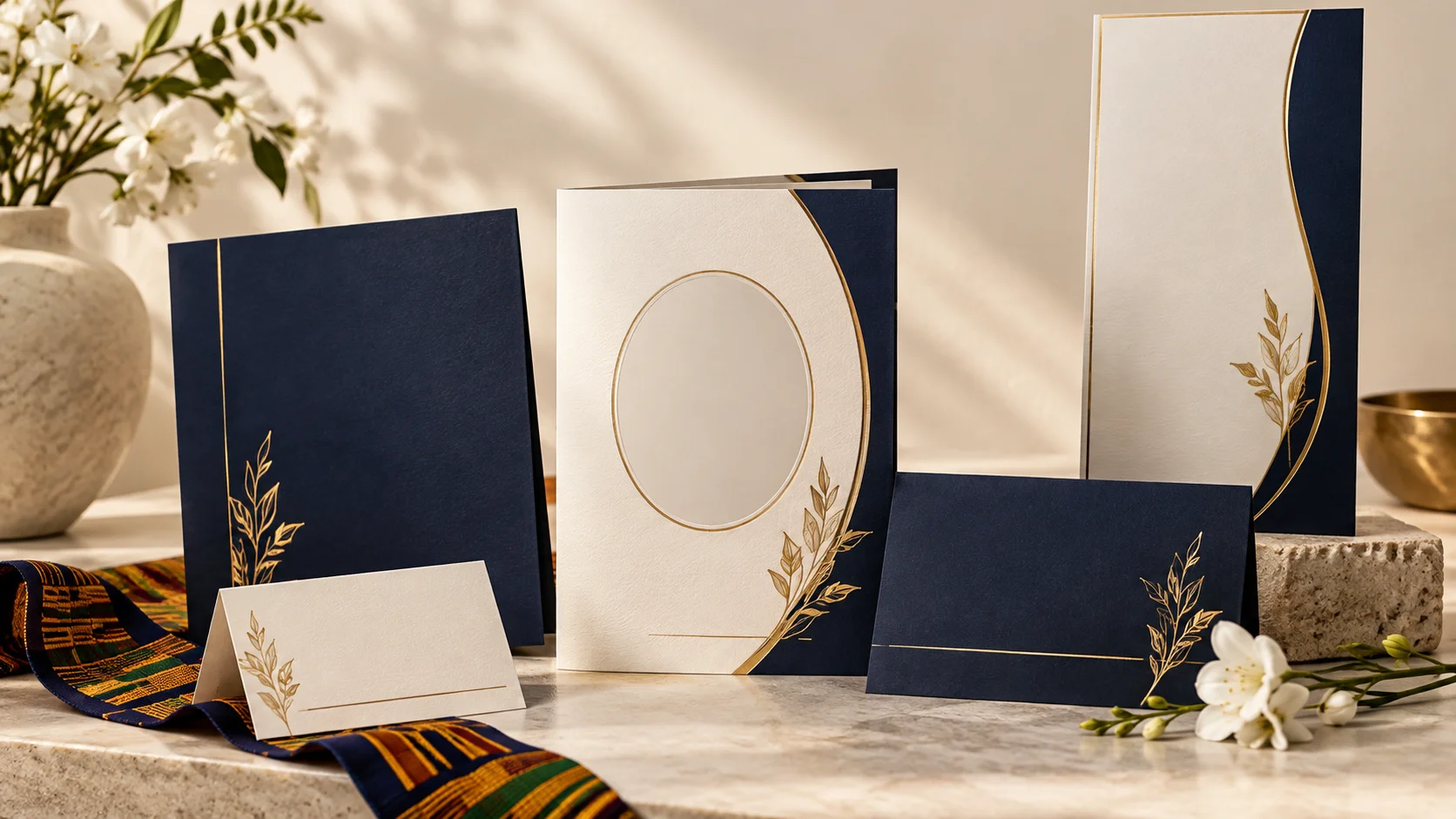
Whether you are planning an Ashanti royal funeral, a Fante coastal burial, or an Akuapem hillside ceremony, understanding and honouring Akan funeral traditions ensures that the departed are given a dignified send-off. Use FuneralPress to design funeral brochures, thank-you cards, and posters that incorporate Adinkra symbols and traditional motifs — bringing culture and design together beautifully.